
A father sitting by a café window, holding a mug of coffee

Who supports Dad?

When a child passes away, fathers can become the strong one.

The practical one.

The person trying to hold everyone else together.

But Dad is grieving too.

Fathers Grieving Together exists to give fathers somewhere they can be supported in their own right.

No pressure to say the right thing.

No expectation to move on.

And no need to repeatedly tell the whole story.

Just somewhere to start.

One-to-one. Private. At your pace.

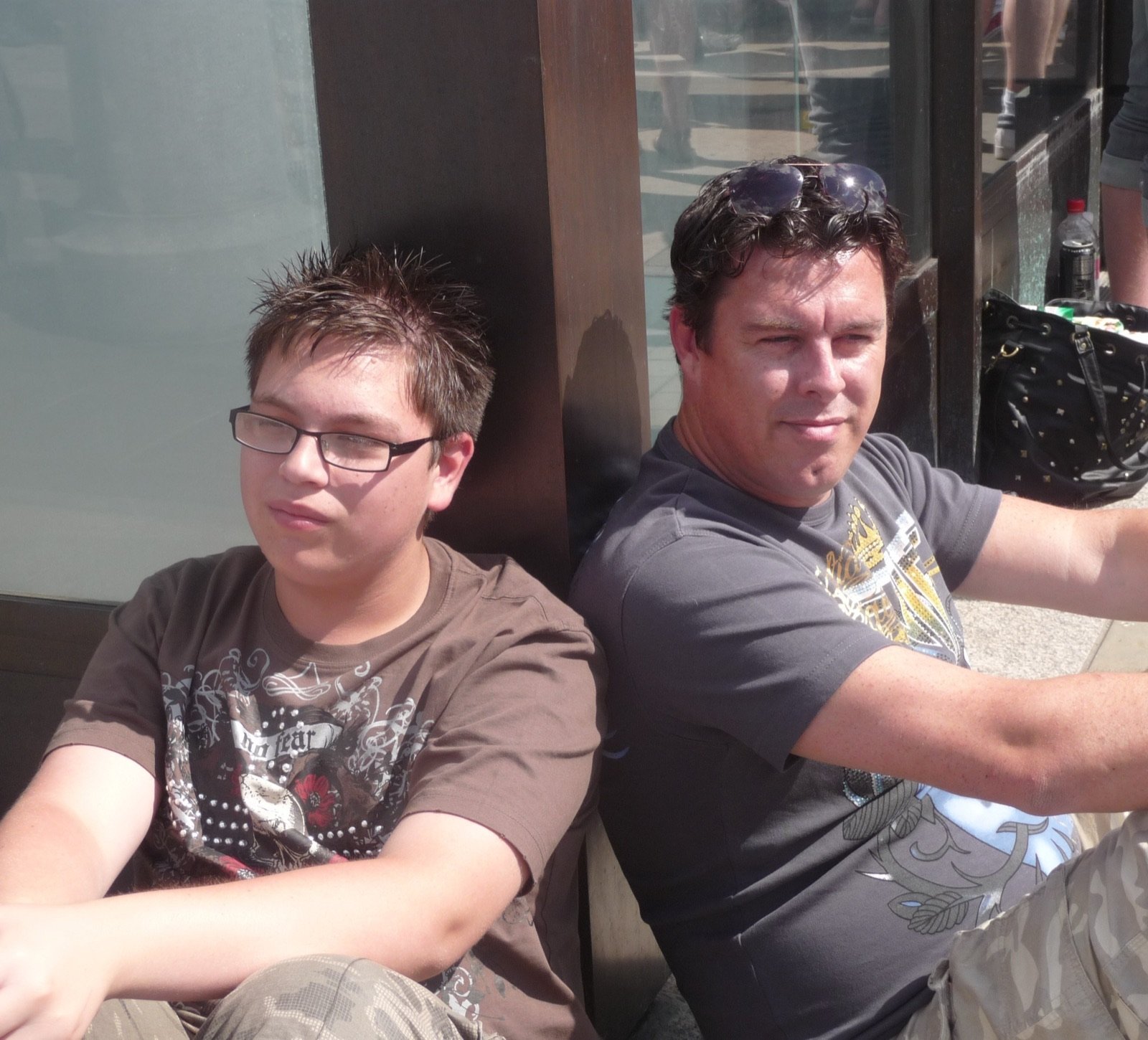
Carl and his son James sitting side by side against a shop window on a sunny day
Carl and his son, James
About Carl

Why I created Fathers Grieving Together

I’m Carl.

My son, James, passed away.

After James passed away, I became very aware of how easy it is for fathers to disappear into the background of grief.

People care. People mean well.

But fathers can quickly become the person expected to cope, get back to work, support their partner, support the family and somehow keep functioning while their own world has changed completely.

I originally created Fathers Grieving Together not long after losing James.

Looking back, it was too soon for me.

I was still trying to understand my own grief while attempting to help other people with theirs.

More than two years later, I feel differently.

Alongside my own lived experience as a bereaved father, I am a trained therapist with more than 30 years’ experience working with people affected by PTSD, emotional trauma and grief.

I also co-created The Manse Method® and Emotion Pathway®, drawing on decades of therapeutic experience and practical work with people experiencing emotional distress.

But grief and loss were part of my life long before I became a therapist.

I lost my dad from my life through abandonment when I was four years old. As a child, I didn’t have the words for what that loss meant, but I understand now that children can grieve someone who is still alive.

My mum passed away in 2000, and over the years I have also experienced the loss of other family members and friends.

I’m approaching 60 now. If you live long enough, grief touches most of us in one form or another.

What I have learned, both personally and professionally, is that there is no single right way to grieve.

I don’t believe grief needs fixing.

I do believe fathers deserve somewhere they can be heard, understood and supported without being told how they should feel.

Grief isn’t a problem to be solved.

It’s what love looks like when the person you love has gone. It doesn’t need fixing. It needs room.

Many men have been taught to handle things on their own, to get on with it, to not make a fuss. Those instincts aren’t wrong. They’ve probably carried you a long way. But grief tends to wait. It shows up as tiredness, a short temper, a tight chest, not sleeping, working all hours, or feeling nothing at all.

  • Something to get overSomething you learn to carry differently
  • Stages you complete in orderA path you walk, in your own way and your own time
  • Talking about everything, all at onceSaying only what you’re ready to say
  • A sign you’re not copingA sign of how much you love your child

The Emotion Pathway®

A simple, flexible way of making sense of what you’re carrying. It isn’t a ladder to climb or a checklist to finish. It’s a path you can walk in any direction, as often as you need.

Recognise Reassure Release Return Reflect

  1. Recognise

    Noticing what you’re actually carrying, whether that’s grief, anger, exhaustion or numbness, without judging yourself for it.

  2. Reassure

    Understanding that what you’re feeling is a natural response to the loss of your child. You’re not losing it. You’re grieving.

  3. Release

    Finding safe ways to let some of it out, at your own pace. Not everything, and never all at once.

  4. Return

    Coming back to work, family and everyday life, with your child still part of you, not left behind.

  5. Reflect

    Taking stock of where you are, what has changed in you, and what matters now.

Most people move back and forth between these. An anniversary, a song, a school photo can bring you straight back to the start. That’s alright.

There’s no finish line and no right order. We simply start wherever you are.

Just you and me. No group, no audience.

A private conversation with another father who understands, at a pace that suits you.

You won’t be asked to share anything you don’t want to. Some sessions are about your child. Some are about work, or your marriage, or how to get through Christmas. Some are mostly quiet. All of that is fine.

  • Completely confidentialWhat you say stays between us.
  • Your pace, your wordsYou decide what we talk about, and what we leave for another day.
  • Practical as well as emotionalHelp with the real-life side of grief: going back to work, supporting a partner, talking to your other children.
  • From someone who’s been thereLived experience, not theory. You won’t have to explain why it still hurts.

You do not have to move on from your child.

You can learn how to move forward with them still part of you.

Is this for me?

If you’re wondering, it probably is. You don’t need to be at breaking point to deserve support. And you don’t need to know what to say.

  • Your son or daughter has passed away, recently or many years ago.
  • You lost your child before birth, as a baby, as a child, or as an adult.
  • You’ve been holding everyone else together and haven’t had space for yourself.
  • You don’t really talk about it, and you’re not sure you want to start with a group.
  • You’re finding work, home or sleep harder than you let on.
  • You’re not sure “counselling” is for you, but you know something needs to give.

However you lost your child, and however long ago, you’re welcome here.

About the sessions

What to expect

No forms to fill in beforehand. No pressure to commit to anything. Just a conversation.

Where

Sessions take place by private video call, so you can join from wherever you feel most comfortable: home, the car, a quiet room at work. Camera on or off, your choice.

How long

Each session lasts 90 minutes. Some men come once; others prefer to meet regularly for a while. There’s no set programme.

The first session

We’ll start gently. You can tell me as much or as little as you like about your child and where you are now. If it doesn’t feel right, there’s no obligation to continue.

What it isn’t

This isn’t a clinical service or a crisis line, and I won’t be trying to diagnose or fix you. It’s support from someone who understands, alongside any other help you may have.